
Where the Work Shows Up
30 years of consumer psychology research. Dozens of outlets. One consistent argument:
Your customers are not behaving irrationally — you just have the wrong map.
Here you’ll find the articles, podcast conversations, and newsletter issues where I make the case. Some of it will challenge what you think you know about why customers buy. That’s the point.
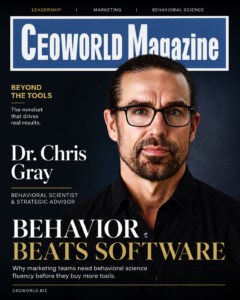
Why Marketing Teams Need Behavioral Science Fluency Before They Buy More Tools (opens in new tab)
Does your team actually understand why your customers hesitate, resist, or walk away? Or just what they clicked on?
Those are different questions. Most marketing stacks answer the second one really well and the first one not at all. In this CEOWORLD piece I talked through why that gap matters, and why it should be fixed before the next tool purchase, not after.
One line that sums it up: "A marketing team can now measure almost everything and still misunderstand the customer."
Articles & Press
Pieces I’ve written or been profiled in. The goal is always the same: make the psychology useful, not just interesting.
AI Is Changing The Role Of The Marketing Strategist. It Will Expose Who Understands The Customer
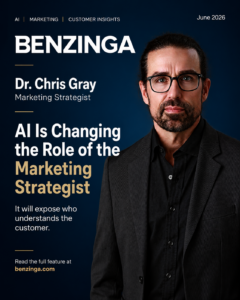
AI can produce your campaign in minutes. It can't tell you if it's actually right for your customer.
Speed isn't strategy. And right now, a lot of "sophisticated-looking" marketing is just shallow thinking with better production values.
What AI is really changing about the marketing strategist's job, and why consumer psychology is about to matter more, not less.
"Gray's work sits at the intersection of psychology, ethics, and technology. At a moment when algorithms decide what we see, what we are offered, and increasingly what we desire, he has become a leading voice asking an uncomfortable question: What happens to human decision-making when optimization replaces understanding?"
Dashboards show patterns, not motivations. A purchase can be convenience, anxiety, habit, aspiration, or "I ran out of time to compare options." Same action, completely different psychology, identical row in your spreadsheet.
"Behavior always makes sense from the consumer's point of view, even when the reasoning behind that behavior remains invisible."
You don't fix that with a better dashboard. You fix it by asking better questions about the person generating the data.
Question I get asked a lot: does "ethical persuasion" actually work as well as the manipulative stuff?
Better, usually. It's just slower to show up on a weekly report. A new Tech Times profile digs into the case for it: most companies chase awareness with better algorithms, when the real advantage is understanding human nature well enough that people want to say yes.
One line that stuck with the writer, and with me: "Human beings don't wake up wanting to be sold to. They want to be seen."
Every category has a version of the "drive-by aisle" excuse: the low-consideration purchase, the commodity shelf, the category nobody's supposed to think hard about.
Convenient story. Often wrong.
Here, I walk through the research behind that specific claim, and a case study of a brand that decided to actually test it instead of repeating it. The category wasn't as indifferent as everyone assumed. The team just hadn't asked the right questions yet. Worth a read before your next planning meeting writes off a category for good.
Podcast Appearances
Conversations where I get to go deeper than a blog post allows. Some of these run long. Worth it.
podcast
Leadership Psychology with Christopher Gray
Our host, Madison, asked what I wish people knew about consumer behavior. The honest answer: your customers aren’t irrational — you just have the wrong model. 41 minutes on what actually drives buying, why emotional connection and manipulation aren’t synonyms, and how AI is already changing the calculus without most brands noticing.
Podcast Appearances
Conversations where I get to go deeper than a blog post allows. Some of these run long. Worth it.
podcast
Episode 448: How to Get Customers To Buy with The Buycologist
Our host, Madison, asked what I wish people knew about consumer behavior. The honest answer: your customers aren’t irrational — you just have the wrong model. 41 minutes on what actually drives buying, why emotional connection and manipulation aren’t synonyms, and how AI is already changing the calculus without most brands noticing.
“No” is rarely about your offer. It’s about psychological friction your customer couldn’t name — and you weren’t seeing.
A sales meeting that went completely sideways. What came out of it: the Shopper Passport, multimillion-dollar partnerships, and a lesson in customer empathy that still runs the work.
Our host, ASG, quizzed me on Nike, Apple, and Tesla. Why do we buy brands when better options exist? “Better product” is almost never the real answer.
Most brands enter the room convinced they already know what the customer wants. Curiosity is what you practice instead. 30 years of proof that it changes everything.
Walmart, Coca-Cola, Adidas. What the brands that actually cracked shopper behavior know — and what everyone else is still guessing at.
Substack Articles
The channel where I go unfiltered. Consumer psychology applied to the decisions your team makes every week.
AI made information cheap. Wisdom stayed expensive. This issue is about the judgment gap — why your team's biggest AI risk isn't hallucinations, it's the overconfidence that comes from polished-sounding nonsense delivered at speed.


Omotenashi and the Kind of Influence That Works Better Because It Cares Better
The myth that influence is about persuasion technique. What a Japanese philosophy of radical care reveals about what actually earns customer trust.

Your Customer Isn't Stalling. They're Managing Risk.
What looks like a stalled deal is usually a risk calculation your team isn’t seeing. Five types of purchase risk that quietly kill conversion — and how to reduce them.
Six Reasons Customers Reject Your Help (Even When They Need It)
"Adding value” is the phrase teams hide behind when they’re not actually solving the right problem. Six psychological reasons your help gets rejected anyway.

12 Surefire Ways to Kill a Focus Group: A Field Guide for Avoiding Meaningful Insight
Most focus groups are designed to confirm what you already believe. A field guide to bad research — so you stop running it.
Don’t wait for the archive. Get the next one when it drops.
Every issue, one consumer psychology insight — explained clearly, applied directly. No filler. No “thought leadership theater.”
See a Topic that fits your audience?
If you’re putting together a conference, sales kickoff, or leadership program — let’s talk about what your audience needs to hear.